Travelers to the Western Cape in South Africa are no doubt spoilt for choice in the things to do and attractions to see. Capetown alone offers so much, and for those who can afford to tear themselves away, check out Hermanus, especially if you are a whale fan!
Hermanus is a town just 1.5hours away from Capetown, and is renowned for one thing - whale watching. In fact, it is reputed to be the best destination for land-based whale watching.
Whale watching right from the town
That's right. From June to November each year, the Southern Right Whales would come to Walker Bay to calve. And that's where Hermanus is situated - a coastal town hugging Walker Bay and a series of rocky cliffs. From the town, a Cliff Path Walking Trail is available where visitors could leisurely stroll along the coast and sight the whales! And even if no whales are in sight, the rocky cliff formations are quite a sight as well.
Views from Hermanus
Another view from Hermanus!
The whales are known to come quite near the shore though, particularly in September (hence its land-based whale watching title). Naturally, a Hermanus Whale Festival is held, though the dates do vary. Personally I think its just an excuse to increase prices....:p The town's tourism draw is so big that there is even a town crier. Yes, whenever a whale is sighted, he would sound a horn that could be heard all over town!
The Whale Crier of Hermanus
For those who want to get even closer, there are whale watching cruises available as well. The cruises last 2-2.5hrs and they bring you to the spots that the whales frequent, and prices range from ZAR450-600 (~ USD42-56).
Sighting the whales during the boat cruise
Unfortunately, we could not see the whales do a "breaching", ie leap out of the water!
While Hermanus can be easily visited in a day (it's supposed to be a very popular day-trip from Capetown), an overnight stay is recommended as the town is indeed a very nice town to relax by and there's plenty of nice accommodation options with sea views. Unfortunately, there are no public buses from Capetown, and while it is listed as a Baz Bus destination, it is technically not. The Baz Bus drops you at quite a distance from Hermanus, and you would have to fork out additional money for the transfer into Hermanus. So, self-drive would still be the best bet!
One of the biggest religious festival in Peru is Semana Santa, and one of the most famous and biggest celebrations occur in Ayacucho.
During the Holy Week, the whole town of Ayacucho is abuzzed with activities and decked in colour. One of the predominant sights you will see is teams preparing their alfombras or Semana Santa carpets. These carpets cover pretty much most of the Plaza de Armas or central square, as well as many side cobbled streets and alleys. Made from sand, coloured sawdust, flowers etc, they are art masterpieces in every sense of the word. Intricate designs, outstanding colours, precise craftsmanship, I am truly impressed by these carpets. It is said that the design takes months to come up with, and is unique every year. But sadly, they don't last beyond 24 hours....
As part of the celebrations and ceremonies during the week, there will be daily processions where participants show their devotion and/or perform religious rites. These alfombras are actually constructed on the processional route/path. So these artful carpets get trampled on, shuffled through (especially those carrying big floats!), and essentially gets wiped out after each procession. And even if they are not, they would be, to make way for the next alfombra to be constructed. Depending on the size and complexity, some can take 12 hours or more, so I guess it would be some sort of a race to get it completed before the next coming procession.
There will be alot of other celebrations and ceremonies in Ayacucho, and as mentioned, Ayacucho hosts one of the biggest. So accommodations and transport should be booked in advance. We were there in the early part of the week and did not see many foreign tourists. However, come Good Friday to Easter Sunday, the entire town is packed with locals and foreign tourists alike. The tourist offices and visitor centres are supposed to have more information regarding the activities happening, but it seems that most are in Spanish only. Nevertheless, you can always find something happening somewhere!
While I am not a Catholic (nor any religion for the matter), I thoroughly enjoyed the sights and festivities in my 1 week in Ayacucho. Especially the beautiful, colourful Semana Santa alfombras.
Taunggyi, the capital of Shan State in Myanmar, and a transport hub for travelers to Inle Lake and Nyaung Shwe, also plays host to one of Myanmar's biggest and rowdiest festivals - the Fire Balloon Festival!
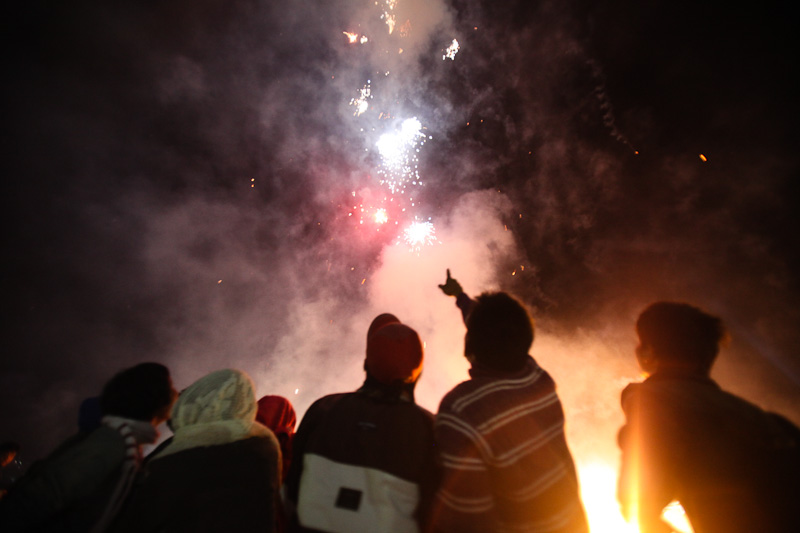
Held annually, usually in November, and lasting a week to coincide with the full moon day, the festival attracts hordes of visitors from all over the country. In 2012, the festival was held from 21-28 November. During the festival, contests are held whereby huge balloons are constructed by teams from associations and groups from neighbouring towns etc, to compete in 3 categories. In the day, the balloons take the form of dragons, elephants, pagodas etc, but I'm unclear how the judging is made - presumably on how ornate the balloon is designed (note that these balloons are huge!). However, it's at night where the competition heats up (literally)! The balloons are generally huge oval-shaped hot-air balloons, carrying a basket full of carefully arranged fireworks. These balloons are launched by their respective teams, and when the balloons are in the air, the fireworks are released systematically. The balloon that goes up the highest, and with the most spectacular fireworks would be judged the best! Finally, there is another category where the balloons would be decorated with candle-lighted designs. The candles are lighted and placed onto the balloon only during launch, and requires quick and organised coordination by team members.
And while all these are going on, the festival grounds is one huge carnival. Lanes and lanes of makeshift foodstalls compete for attention. Carnival favourites like the merry-go-rounds and ferris wheels take up substantial portion of the area with frenzied activity - they are all human-powered, even the ferris wheels! To complete the festivities, another huge area is set up as a concert ground, where live bands and singers perform for the night. No doubt one of the biggest festivals I've seen.
However, a few notes of precaution. Myanmar's tourism infrastructure is still struggling to cope with its recent influx of tourists, let alone such a hugely popular festival with the locals. So accomodation options are extremely limited for foreigners (esp budget ones). The nearby town of Nyaung Shwe has more accommodation options since it is the access town for Inle Lake. Even then, its limits were tested. I could not find any accommodation when I arrived and had to settle for some floor space on monastery grounds. Transport between Taunggyi and Nyaung Shwe were limited to private taxis as public transport does not quite get to the festival grounds, and the festival lasts till past midnight. And finally, even as alot of fire was involved in the celebrations, I'm sure the festival would not pass any safety awards. As the balloon rises into the sky, the pyrotechnics spewing down onto the festival ground is as exciting as it gets. Your run for cover during paintball games is literally kids play compared to this! And then there's the bad news. Not all the balloons have successful flights... some do come crashing down...................
Nevertheless, everyone is out for good fun as evident by the turnout. A definite highlight on my trip to Myanmar!
October 22 is a good day to be in Kyoto. Aside from the famous Jidai Festival, there is another interesting festival held on the same day - the Kurama Fire Festival (Kurama Hi Matsuri). While the Jidai Festival is held during the day, Kurama Fire Festival happens in the evening, so you get a full day of activities!
The Fire Festival however, is held in the village of Kurama, 30-45 min away from Kyoto by train. The village itself, is a delightful "traditional wooden houses" village, and makes for a good visit on its own. The festival is a ritual where huge pine torches are used to guide spirits between the realm of the living and the dead. It begins at 6pm where the houses in the village would light up with watch fires at their entrances. Then the local residents would get their young children to bear small pine torches and conduct a procession ceremony through the village chanting "Sai rei ya, Sai ryou" (which means "festival, good festival!"). Subsequently, the men (in traditional costume of loincloth and a strange half-shirt) would do similar, with huge pine torches, some weighing 100kg! Two portable shrines are then paraded through the streets and eventually, enshrined at a place called "Otabisho". On October 23, another ceremony takes place where these portable shrines are then taken down and enshrined at the Yuki jinja shrine.
Festival start off with young children bearing small pine torches
The adults carry a much bigger torch!!
It's heavier than it looks! And note the interesting attire they are wearing
Starting procession with portable shrines
A few notes and information to people (esp photographers) making a trip to see the festival.
- Aside from the fires, there are very little other lighting. So generally, there will be big differences in lighting in your scenes.
- Due to the crowds, the whole site is heavily policed with very restricted lanes for tourists to move in. You will be literally herded in a "path" designated for tourists.
- This festival is a traditional local festival - it is not something designed for tourists. So bear that in mind. While you may want to capture a promising frame, respect the people and festival, and not interfere/interrupt the procession. Moreover, it's very chaotic, smoky, and fires burning everywhere, so safety is important.
- A tripod is not practical for this festival (esp the limited space) though a monopod may be useful.
- There will be ALOT of waiting. Right from the start at Kyoto. At Demachiyanagi station on the Eizan Railway in Kyoto, I arrived at 5pm. The queue was spilling out of the station, and I waited till 6.45pm before I could board the tiny local train to Kurama. The festival runs till 12 midnight, and after 8pm, the frequency of trains back to Kyoto was also reduced. So similarly, I had to wait more than an hour for the train back, boarding my train at 10+pm.
- Due to the crowds and the limited space in the village and the designated tourist "lanes", sometimes you could get stuck in the "queues" for 10-20 minutes without moving!
So, if you are very adverse to crowds in smoky environment, or have little patience for waiting, then perhaps you have to think twice about this festival. Other than that, the Kumara Fire Festival is certainly one of the more interesting festivals in Japan!
Once a year in Jindo, one of many islands off Mokpo in the province of Jeollanam-do in South Korea, a festival would take place that would seem of biblical proportions. Known as Jindo Miracle Sea Festival, or Jindo Sea Parting Festival, the seas would part to reveal a road leading from Jindo to a neightbouring island.
While also known as the 'Moses Miracle', local legend instead tell of an old lady who was somehow left behind when the other villagers in Jindo fled to the neighbouring island because of some wild tigers. She prayed to the Sea God who then parted the sea for her to join her family. The phenomenon though, divine or not, actually happens 2-3 times a year, when the tide is at its extreme lowest, revealing a land bridge of sorts that actually connects Jindo to that particular island. The Festival though, was to be held only once a year (well to make it special I guess), and during then, you could join in the festivities and walk the 2.8km land bridge to the island.
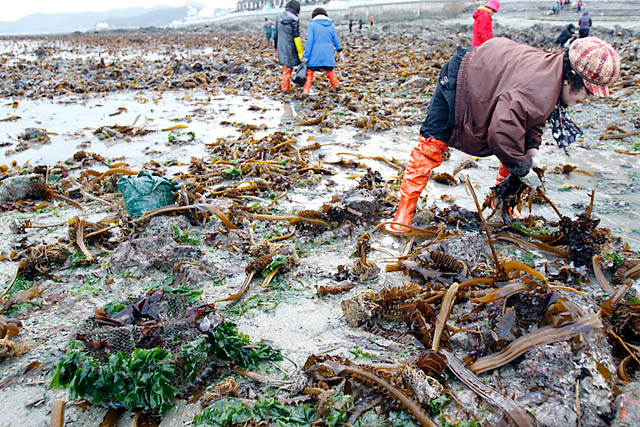
Like many festivals in Korea, a carnival of sorts are almost mandatory, complete with food tents, music and performances. Once evening descends (approx 5pm), when the sea "parts" for an hour or so, the locals spring into action - no, not to cross the parted sea, but to scour the land!! This is something definitely more down-to-earth - free seafood for the masses! From seaweed to mussels, from crabs to abalone, families comb the land bridge for the riches of the seabed. No doubt what sort of dinner these families are having for the week... What a sight!
There are express buses from Seoul to Jindo which takes about 5hrs, and there are direct ferries from Jeju to Jindo too. However, for those who would want to enjoy the festival or event longer, it may be a good idea to stay in Mokpo, which is easily accessible via train from Seoul as well. Mokpo to Jindo is just 30minutes by bus. There are a couple of accomodation options in Jindo too, but as the Formula One race had arrived in Mokpo some years back, the upgraded motels in Mokpo seemed very well valued with excellent in-room facilities at affordable prices (we had a luxurious twin room for 55,000 won).
For those who have yet to experience a "miracle", check out Jindo's Miracle Sea Festival! ;)
Summer in Japan is humidly hot, especially on the main island of Honshu, but it is during this season where there are tons of festivals about. Thus on my overland journey from Hokkaido (which is really pleasant for sightseeing in summer) back to Tokyo, I managed to catch the Three Great Festivals of Tohoku - Aomori's Nebuta Matsuri, Akita's Kanto Matsuri and Sendai's Tanabata.
Aomori's Nebuta Matsuri is held from August 2-7, and consists of a parade of music and dances, with the highlight being the huge graphic lantern floats. These paper lantern floats are fantastically detailed, depicting the gods and demons of Japanese/Chinese culture. They are mounted on a huge wheeled platform, and pushed and spun about by a contingent of energetic enthusiastic men. These floats supposedly take a year to design and build, and looking at the artistry, it's not hard to believe!
Akita's Kanto Matsuri is held from August 3-6. The highlight of the festival is the balancing of kanto - bamboo poles adorned with paper lanterns. The performers do that sequentially using 4 methods - on the palm, forehead, shoulder, and hip... all using one hand! During the day, competitions are held with teams and individual events, accompanied by drums and music. During the night parade, the streets are lined with these kantos, and the lanterns lighted with real candles. On a single signal, all the kantos are hoisted up and a mass display of skill occurs. Amazing sight!
There are many Tanabata festivals in Japan, but Sendai's one of the biggest and most famous. Also known as Star festival, it is based on the Chinese legend about the cowherd and weaver girl which is held on the 7th day of the 7th lunar month. However, due to calendar differences, different Tanabata festivals are held on July as well as August. Sendai's Tanabata is held on August 6-8. Basically, the whole city's shopping streets and arcades will be decorated by these long paper streamers, designed and made by just about any local organisation (schools, shops, communities, groups etc). Aside from these decorations though, this festival appears relatively uninteresting as compared to the other two. There are, of course, performances, music & dances and various points in the city.
There are lots more other festivals scattered across the country, and the most wonderful aspect of the festivities is that, everyone turns up in their traditional attire, and seeing all those kids all dressed up really makes them soooooo kawaii!! :)
Mention Harbin, and the Ice Lantern Festival comes to mind. In fact, it is Harbin's number one tourist attraction, and so, significant efforts are also put in to capitalize on this.
Beautiful lighted ice sculptures
There are now like three locations where you can admire and see the snow and ice sculptures - Zhaolin Park, Sun Island, and the Snow & Ice World. All require entrance tickets in excess of 100RMB each. The biggest is probably Snow & Ice World, but all will be crowded. And they are best admired at night where the multi-coloured lights bring the sculptures alive.
However, I actually enjoyed some of the other attractions aside from this number one attraction!
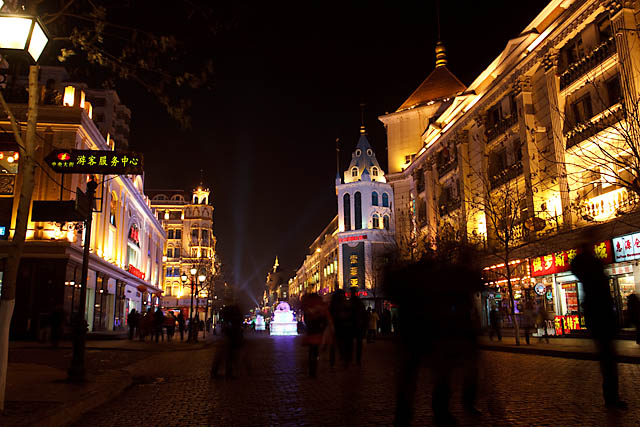
The main tourist street of Zhongyang Dajie (中央大街 ), a cobbled pedestrian street, makes for nice browsing with Russian influenced architecture, some dating back 1900s. And it's really nice to just chill in a warm cafe after a wintry walk! (And the cafes have nice decor too!)
The Church of St Sophia, the most photographed picture in Harbin, is well worth its shutter time especially early morning or late evening when it is bathed in the winter sunlight.
I also enjoyed the walk across the Songhua river, where you know as you stand in the middle of the river that this view is only possible in winter. There are also all manner of activities on the frozen river, from horse-carriage rides to sledding. But I prefer to walk - how often can you walk on a river?! ;)
And the amazing winter swim that the locals partake, though having to pay an entrance fee to see it caught me off-guard for a moment (and then I remembered I am in China... :p). It's interesting to note that for the "warm-up" before they plunge into the icy-cold waters, the participants actually roll themselves on the snow/ice-covered ground! I guess it's to minimize the shock the body gets when they jump in.
I've always enjoyed winter, though in Dongbei (Northeast China), you have to be properly equipped for it. A number of friends are particularly concerned about visiting Harbin since many are worried about the extreme cold here. But once you're properly well attired (a good down jacket is an absolute must!), Harbin is really quite enjoyable!
Somewhere between the High Atlas mountains and the Dades valley of Morocco lies El-Kelaa M'gouna. Every year in spring, waves of tourists and locals will converge here for the Festival of Roses.
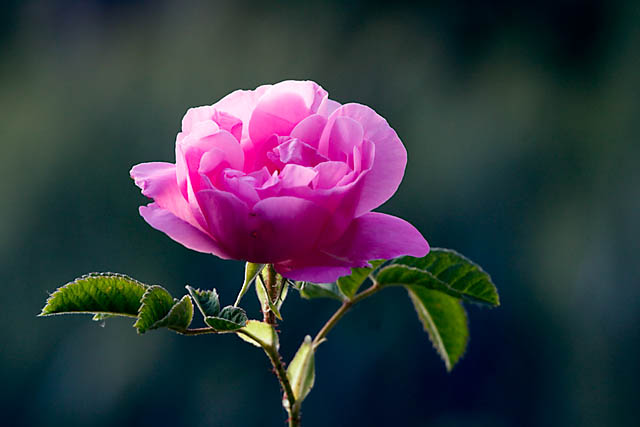
Also known as Vallee des Roses, or the Valley of Roses, the area is known for its production of rosewater. The pink Persian rose, also known as the Damascus Rose, will be harvested during this period when the valley floor is filled with them. However, these roses are relatively small in their hedges, so they may not be easily noticed initially, esp when you are on the main road. If you expect to see "fields of pink", you may be disappointed like me. But they are big in their importance as they provide the main income to the people of the area.
The Festival is supposedly held over 3 days over in the 1st weekend of May, but it really is not fixed. A parade will be held on Sat in the town, where it will pass through the main road. Floats and performances will be the main entertainment. The winners of the Miss Rose pageant, selected the day before, will be one of the highlights of the parade, together with a "Queen" of some sort. After the parade, the whole town essentially becomes a giant carnival and souk, and the whole local community enjoying what it seems like a rare holiday opportunity.
Most details of transportation and accommodation are highlighted in the various guidebooks. If you are in the area during May, check out the Festival of Roses. The Damascus Rose is indeed sweet smelling!
Litang (理塘) is a county in the Sichuan province of China. It's town, of the same name, is known as one of the highest towns in the world. At 4014m, it is actually higher than Lhasa, but since it is not served by airport, getting into Litang is usually by bus or private transport, and you'll be less likely hit by altitude sickness.
Litang is the birthplace for several Dalai Lamas, and so, one of the things to do here is to visit the monasteries, the main one being Chang-qing-chun-ke'er. During our visit, the monks were having some sort of exam, and it was interesting to see that it was pretty much similar in many aspects to our exam taking scenes! Litang used to be part of the Tibetan Kham province, and the Khampa Tibetans still form the majority of the population here. In town itself, many of the residents are still in their traditional garb, and every evening, there would be Tibetan dances in one of the squares in the town!
Litang also hosts its annual horse racing festival in August. It is a well-known major event, and many travellers would come here to witness the festival. If you do intend to catch this, you'll have to plan ahead and book your accommodations in advance. Too bad I didn't catch this event, as it would provide fantastic photography opportunities! So, no photos of the festival here... Hopefully next time! :)
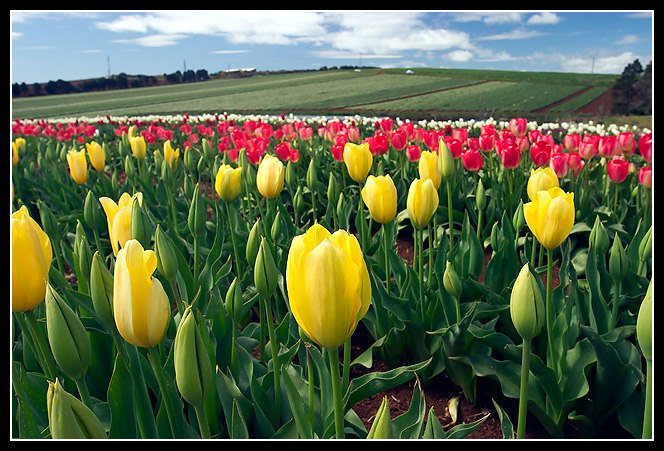
Most people would associate Tulip Festival with the Dutch kind, but there are other similar festivals elsewhere in the world. One such place is Wynyard, a town in north-west Tasmania.
Held in October (that'll be spring in the southern hemisphere), Wynyard hosts the annual festivities with plenty of celebrations and fun. There will be parades, games, food - the town literally becomes a carnival. There'll be plenty of children all around, either joining the parading floats, or lining the streets watching the fun. There is even a game competition, called the Tulip Tossing competition! The person who throws a stalk of tulip furthest wins the competition! Who'd have thought of that?
In the surrounding countryside of Wynyard, there're a number of tulip farms. However, the year I went, spring was late, so we didn't get to see the full bloom. Nevertheless, it was still quite a pretty sight, and definitely worth a road trip! Especially if you love flowers in bloom!
Off-the-beaten-path destinations. Beautiful places. Swee Ong pursues his passion of travel and photography with half a budget but all his heart.
While not sharing images and stories of his travels around the world, he wanders within the hectic world of the IT industry.