Showing posts with label traditional. Show all posts

Sunday, November 3, 2013

Svaneti, Georgia

The Caucasus mountain region of Svaneti in Georgia was raved about, both in guidebooks as well as by travelers. It is not difficult to see why. Boasting high mountain peaks, unspoilt trekking opportunities, and villages steeped in ancient traditions, it is an out-of-the-beaten-path destination that time had passed it by.


The town of Mestia is the tourism hub of Svaneti, with transport links to the rest of Georgia. But there are smaller villages in the region that could provide an even more authentic stay. I was referred to a homestay in the village of Becho, where indeed I had the experience of traditional living with a Svan family. Unfortunately, it was so "non-touristy" that no English was spoken, and I could not find out more information about their life. But I was treated to a small little "performance" by the little boy in the family, which I believe is a form of their traditional polyphonic singing in the Svaneti region - an art inscribed into UNESCO’s Intangible Cultural Heritage Lists!

 
Friendly villagers


Baking Khachapuri the traditional way!


However, what is famous in the Svaneti region is their architectural monuments inscribed in the UNESCO World Heritage Site - the defensive watch towers of the Svans. The Svans, a sub-group of Georgians with their own language, are a fiercely independent people, and during the old days, warring between villages and tribes are common. Thus these towers are built and usually connected to a family's house, and integrated for their protection. Now, these towers are found scattered around Mestia, and can be easily visited.


And of course, there is the trekking. Fabulous mountain country to trek in, although in summer, the weather is surprisingly humid hot. Even if you can't do the popular 4-day trek between Mestia and Ushguli, reputed to be the prettiest village in Svaneti, simple day treks around Mestia would easily let you appreciate the natural scenery around. 


Transport in Georgia is basically run by marshrutkas or mini-vans. Direct from Tbilisi, it takes 12-13 hours (usually more) and there is only 1 per day early in the morning. What I did was to stop at Kutaisi, where the town itself has several interesting sights. There are then slightly more marshrutkas from Kutaisi to Mestia. 

Check out Svaneti when in Georgia! 

Saturday, November 24, 2012

Kurama Fire Festival

October 22 is a good day to be in Kyoto. Aside from the famous Jidai Festival, there is another interesting festival held on the same day - the Kurama Fire Festival (Kurama Hi Matsuri). While the Jidai Festival is held during the day, Kurama Fire Festival happens in the evening, so you get a full day of activities!

The Fire Festival however, is held in the village of Kurama, 30-45 min away from Kyoto by train. The village itself, is a delightful "traditional wooden houses" village, and makes for a good visit on its own. The festival is a ritual where huge pine torches are used to guide spirits between the realm of the living and the dead. It begins at 6pm where the houses in the village would light up with watch fires at their entrances. Then the local residents would get their young children to bear small pine torches and conduct a procession ceremony through the village chanting "Sai rei ya, Sai ryou" (which means "festival, good festival!"). Subsequently, the men (in traditional costume of loincloth and a strange half-shirt) would do similar, with huge pine torches, some weighing 100kg! Two portable shrines are then paraded through the streets and eventually, enshrined at a place called "Otabisho". On October 23, another ceremony takes place where these portable shrines are then taken down and enshrined at the Yuki jinja shrine.

Festival start off with young children bearing small pine torches
The adults carry a much bigger torch!!
It's heavier than it looks! And note the interesting attire they are wearing
Starting procession with portable shrines

A few notes and information to people (esp photographers) making a trip to see the festival.
- Aside from the fires, there are very little other lighting. So generally, there will be big differences in lighting in your scenes.
- Due to the crowds, the whole site is heavily policed with very restricted lanes for tourists to move in. You will be literally herded in a "path" designated for tourists.
- This festival is a traditional local festival - it is not something designed for tourists. So bear that in mind. While you may want to capture a promising frame, respect the people and festival, and not interfere/interrupt the procession. Moreover, it's very chaotic, smoky, and fires burning everywhere, so safety is important.
- A tripod is not practical for this festival (esp the limited space) though a monopod may be useful.
- There will be ALOT of waiting. Right from the start at Kyoto. At Demachiyanagi station on the Eizan Railway in Kyoto, I arrived at 5pm. The queue was spilling out of the station, and I waited till 6.45pm before I could board the tiny local train to Kurama. The festival runs till 12 midnight, and after 8pm, the frequency of trains back to Kyoto was also reduced. So similarly, I had to wait more than an hour for the train back, boarding my train at 10+pm.
- Due to the crowds and the limited space in the village and the designated tourist "lanes", sometimes you could get stuck in the "queues" for 10-20 minutes without moving!

So, if you are very adverse to crowds in smoky environment, or have little patience for waiting, then perhaps you have to think twice about this festival. Other than that, the Kumara Fire Festival is certainly one of the more interesting festivals in Japan!

Monday, August 27, 2012

Tarabuco Sunday Market

Local markets are always an attraction for me in my travels, and in South America, the local Andean markets make wonderful photographic (and shopping) excursions since they're typically very lively and colourful.


Just 1-2 hrs away by bus from Sucre Bolivia, Tarabuco hosts such a market. Every Sunday, tourists and locals alike would converge into this small Bolivian town. Aside from the permanent shops in town, locals from nearby villages also arrive to set up stalls. The town is home to the Yampara culture, one of the ethnic groups around the region, and so designs belonging to the Yampara on textiles, handicrafts etc can be found aplenty in the market.

In fact, Yampara attire, and especially their headgear, are apparent everywhere, being worn and sold by the locals. While textiles, weavings and handicrafts dominate the market square, more mundane stuff can be found as you move further away from the square - food produce, safety pins, kettles etc, the daily livelihood of the community.


Besides getting photos of indigenous people in their traditional attire, the Sunday market is a great place to get your souvenirs as well! There is relatively little harassing on tourists, and if you're looking to get ponchos or similar textiles, the designs in the market are beautiful! And perhaps you may even get an authentic handwoven one from the village! 


Saturday, June 2, 2012

Lares Trek

One of the highlights of a trip to Peru is undoubtedly Machu Picchu, and the classic way to reach this wonder is via the Inca Trail. However, as the Inca Trail requires special permits and a controlled number of trekkers are allowed on it, advanced reservations are often advised and this may hamper those who's travel itinerary are just planned out a day in advance......


However, there are a number of alternative treks that one could enjoy from Cusco to Machu Picchu. I took the Lares Trek, and really enjoyed it (except the last day). There are a few variants of this trek itself, and the last day of our 3-day trek variant was on a vehicular dirt road, which was not exactly the best of trekking experiences. Still, it was overall a good outing, especially the first 2 days, which were absolutely fabulous!

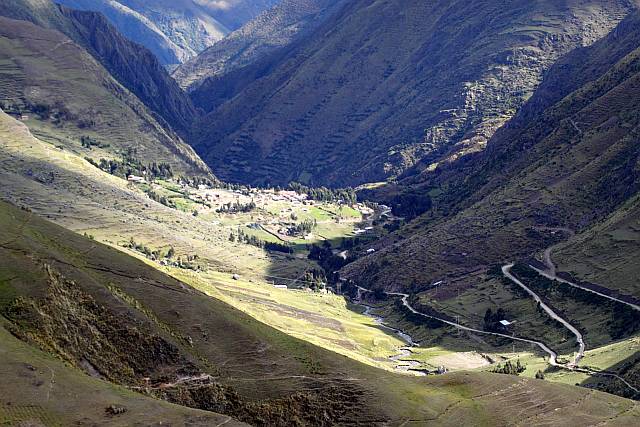
The highlight of the trek for me, is the campsite stop in the village of Huacahuasi. An Andean community still living in old stone thatched houses, complete with villagers donned in their colourful traditional attire, it was a good glimpse into a distant past. These villages are also known for their weaving, and so, getting a handwoven llicilas/manta/poncho would be a real deal vs getting something in the city of Cusco. And camping and sleeping under the blanket of the Milky Way is always something special. The trek itself was not exactly strenous although the altitude would slow you down, with the highest point being over 4000+m. Nevertheless, just take it slow, and stop and admire the beautiful Lares valley and its inhabitants!


The trek ends in the town of Ollantaytambo, where a train ride will bring you to Aguas Calientes where you would explore the wonderful Machu Picchu. A fitting end to a wonderful trek indeed!

Saturday, March 17, 2012

Three Great Festivals of Tohoku

Summer in Japan is humidly hot, especially on the main island of Honshu, but it is during this season where there are tons of festivals about. Thus on my overland journey from Hokkaido (which is really pleasant for sightseeing in summer) back to Tokyo, I managed to catch the Three Great Festivals of Tohoku - Aomori's Nebuta Matsuri, Akita's Kanto Matsuri and Sendai's Tanabata.

Aomori's Nebuta Matsuri is held from August 2-7, and consists of a parade of music and dances, with the highlight being the huge graphic lantern floats. These paper lantern floats are fantastically detailed, depicting the gods and demons of Japanese/Chinese culture. They are mounted on a huge wheeled platform, and pushed and spun about by a contingent of energetic enthusiastic men. These floats supposedly take a year to design and build, and looking at the artistry, it's not hard to believe!


Akita's Kanto Matsuri is held from August 3-6. The highlight of the festival is the balancing of kanto - bamboo poles adorned with paper lanterns. The performers do that sequentially using 4 methods - on the palm, forehead, shoulder, and hip... all using one hand! During the day, competitions are held with teams and individual events, accompanied by drums and music. During the night parade, the streets are lined with these kantos, and the lanterns lighted with real candles. On a single signal, all the kantos are hoisted up and a mass display of skill occurs. Amazing sight!


There are many Tanabata festivals in Japan, but Sendai's one of the biggest and most famous. Also known as Star festival, it is based on the Chinese legend about the cowherd and weaver girl which is held on the 7th day of the 7th lunar month. However, due to calendar differences, different Tanabata festivals are held on July as well as August. Sendai's Tanabata is held on August 6-8. Basically, the whole city's shopping streets and arcades will be decorated by these long paper streamers, designed and made by just about any local organisation (schools, shops, communities, groups etc). Aside from these decorations though, this festival appears relatively uninteresting as compared to the other two. There are, of course, performances, music & dances and various points in the city.


There are lots more other festivals scattered across the country, and the most wonderful aspect of the festivities is that, everyone turns up in their traditional attire, and seeing all those kids all dressed up really makes them soooooo kawaii!! :)

Aside from the heat, it's great fun!!